Physical Protection: Packaging Is the First Line of Defense
In international shipping, packaging is not just something outside the product. Actually, it is the first line of defense. Before the cargo meets the truck, warehouse, forklift, container, vessel, customs inspection, and final delivery, the packaging is already standing in front of the product. If this first protection is weak, the whole shipment becomes risky from the beginning.
Many customers care about shipping cost and delivery time first. This is very normal. But sometimes packaging decides whether the cargo arrives in good condition or arrives with damage. A cheap carton may look okay when it leaves the factory, but international shipping is not the same as sending goods across one city. The cargo may be moved again and again, stacked under other cartons, pushed by forklift, opened for inspection, or placed inside a container for many days.
Actually, good packaging is not only for fragile goods. Even normal products need protection. Clothes, shoes, household items, electronics, furniture, machine parts, ceramic, glass, toys, cosmetics, and personal belongings all need packaging that matches the route. Maybe some goods are not easy to break, but they can still be scratched, crushed, bent, stained, wet, or lost if the outer packaging is too weak.
It is easy to think packaging is just a small detail. But in logistics, small details can become big problems. A soft carton, loose tape, missing label, weak corner, or empty space inside the box may cause trouble later. Sometimes the product itself is not bad, the shipping route is not bad, but the packaging is simply not ready for international transport.
1. Why Packaging Is the First Line of Defense
Packaging meets the risk before the product does. When a carton is moved from supplier to warehouse, the packaging takes the first pressure. When the goods are stacked inside a truck or container, the packaging carries the weight. When the cargo shakes during road transport or sea freight, the packaging absorbs part of the movement. When the box is handled by forklift or manual workers, the packaging protects the inside goods from direct impact.
This is why physical protection should start from packaging. If the outer carton is too thin, if there is no cushioning inside, if the product can move freely in the box, then even a small hit may cause damage. It is hard to imagine, but sometimes a product breaks not because of a big accident, but because it kept moving inside the carton for a long time.
Good packaging does not mean using the most expensive materials every time. It means using the right protection for the right cargo. A carton of clothes does not need the same protection as glassware. A machine part does not need the same packaging as cosmetics. The best packaging is practical, stable, and suitable for the shipping route.
2. Outer Packaging Must Be Strong Enough
The outer packaging is the first thing people see, but more importantly, it is the first thing that takes pressure. For international shipping, a carton should not be too soft or too thin. If the carton is already bent when it arrives at the warehouse, it may become worse during long-distance transport.
Some suppliers use very light cartons because they only think about domestic delivery. That may be fine for short local transport, but not always suitable for sea freight, air freight, or door-to-door international shipping. In many cases, a stronger double-wall carton is better. For heavy goods, reinforced cartons, plastic straps, pallets, or wooden frames may be needed.
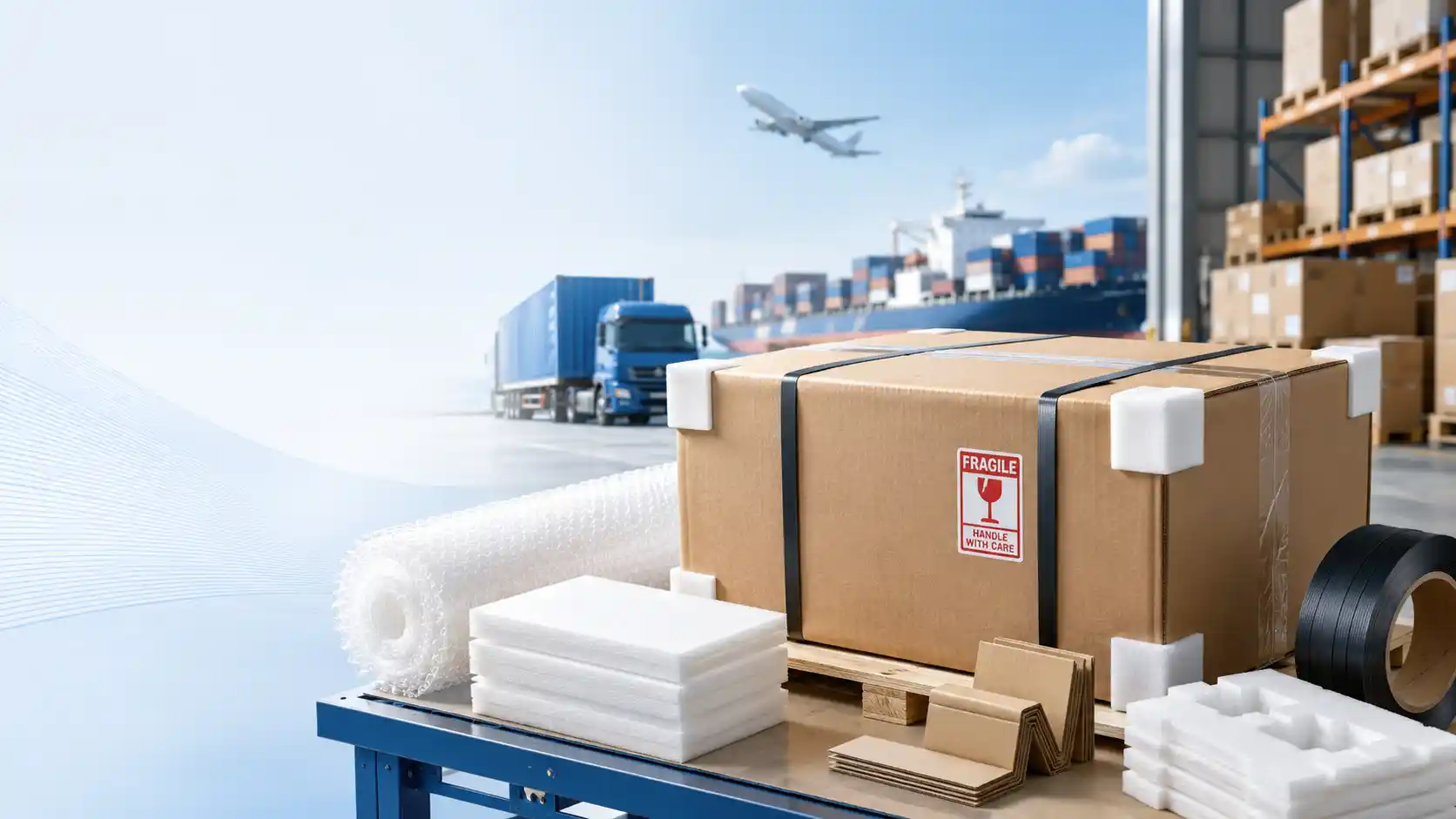
Corners are also very important. Many damages start from the corner because corners are easy to hit. Furniture corners, machine edges, glass panels, picture frames, and long boards need extra attention. Corner protectors may look simple, but actually they can reduce a lot of visible damage.
3. Inner Cushioning Stops the Product From Moving
A strong outer carton is not enough if the inside is empty. This is a common problem. The carton looks fine outside, but the product inside can shake, slide, or hit the carton wall. After a long trip, the product may break, scratch, or deform.
Inner cushioning should hold the product in place. Bubble wrap, foam sheets, foam blocks, paper filling, air cushions, and molded inserts can all help. The important point is not only to wrap the product, but also to fill the empty space. If you shake the box gently and hear the product moving inside, maybe the cushioning is not enough.
For fragile goods, every item should be separated. Glass cups should not knock against each other. Ceramic plates should not be packed loosely. Electronics should not move freely inside the carton. Cosmetics in glass bottles should have enough separation and protection. Actually, many fragile damage cases come from product-to-product impact, not only outside impact.
4. Heavy Cargo Needs Different Protection
Heavy cargo is not always fragile, but it can still be difficult to handle. If the carton is too weak, the bottom may open. If the tape is not strong enough, the box may split. If the goods are loaded without support, they may crush lighter cartons nearby. So heavy cargo needs packaging that can handle its own weight.
For heavy goods, plastic straps, reinforced tape, palletizing, wooden crates, or wooden frames may be better. Pallets are useful when cargo needs forklift handling. They make loading and unloading easier and reduce direct contact with the ground. But pallets also increase volume, so they should be used when the protection value is worth it.
Sometimes customers want to save volume and avoid pallets. This is understandable. But if the goods are heavy, expensive, or easy to damage, not using pallets may create bigger risk. In special cases, saving a little shipping space can lead to much higher loss later. So the decision should be based on cargo type, not only price.
5. Moisture Protection Should Not Be Ignored
Sea freight may take many days or even weeks. During this time, the container may face temperature changes, humidity, rain at port, or moisture inside the container. Maybe the goods are not fragile, but they can still be damaged by moisture. Paper boxes, furniture, fabric, leather products, metal parts, books, and some electronics may be affected.
Moisture protection can include plastic bags, shrink wrap, waterproof film, desiccant, pallet protection, or keeping cartons away from wet ground. Of course, not every shipment needs heavy waterproof packing. But if the cargo is sensitive to moisture, it is better to think about this before loading.
It is very difficult to fix moisture damage after arrival. Mold, rust, stains, soft cartons, and water marks are all troublesome. Actually, moisture risk is one of those things people often ignore before shipping, but regret after delivery.
6. Labels and Marks Are Also Protection
Many people think labels are only for identification. Actually, labels are also part of protection. A clear fragile label tells workers to handle the carton more carefully. An upright mark tells people which side should face up. A shipping mark helps warehouse teams separate cargo correctly. A carton number helps avoid missing pieces.
Of course, a fragile label cannot magically protect a weak carton. If the packaging is bad, a label alone is not enough. But clear marking still reduces the chance of wrong handling. In a busy warehouse, workers deal with many cartons every day. Clear labels make the cargo easier to understand.
For international shipping, labels should be simple and readable. Customer code, destination, carton number, fragile mark, and special handling notes can be useful. If the label is too small, unclear, or easy to fall off, it may not help much. Sometimes waterproof labels or extra tape over the label are better.
7. Packaging Should Match the Shipping Method
Different shipping methods have different risks. Air freight is faster, but cargo still goes through sorting, transfer, loading, and unloading. Sea freight is slower and may involve longer storage time, container stacking, and humidity. Trucking has road vibration. Railway transport may also have long-distance movement and handling.
This means packaging should match the shipping route. For sea freight, moisture and long stacking time may be more important. For air freight, volume weight matters, so packaging should be protective but not too oversized. For door-to-door shipping, the cargo may go through many small delivery steps, so labels and outer carton strength matter a lot.
There is no one perfect packaging for all routes. A practical freight forwarder or warehouse team should look at the cargo, route, cost, and risk together. Maybe simple carton reinforcement is enough. Maybe palletizing is better. Maybe wooden crate is necessary. The answer depends on the real goods.
8. Repacking Before Shipping Can Save Trouble
Sometimes goods arrive at the warehouse with weak packaging. This happens often, especially when customers buy from different suppliers or online platforms. Some cartons are fine, some are soft, some are half-open, and some have no clear labels. If these goods are sent directly, the risk is higher.
Repacking is not always required, but it is very useful when the original packaging is not strong enough. The warehouse may add tape, change cartons, add cushioning, combine small cartons, separate fragile items, or put goods on pallets. Actually, this step can make the whole shipment look cleaner and safer.
For mixed cargo, repacking is also helpful for space use. Many small messy cartons may waste volume. A better packing plan can reduce empty space and make loading easier. But the warehouse should also be careful not to mix goods wrongly. Photos and records are important during repacking.
Physical Protection Packaging Checklist
- Check whether the outer carton is strong enough for international shipping.
- Use inner cushioning to stop products from moving inside the box.
- Add corner protection for furniture, glass, machines, and sharp-edge items.
- Use pallets, straps, wooden frames, or crates for heavy or high-risk cargo.
- Consider moisture protection for sea freight and long-distance routes.
- Use clear labels, carton numbers, fragile marks, and upright signs when needed.
- Take photos before and after repacking for better records.
- Match packaging method with cargo type, shipping route, and delivery requirement.
9. Poor Packaging Often Costs More Later
Some customers feel packaging reinforcement is an extra cost. Actually, it can be a cost-saving step. If the packaging is too weak, the cargo may be damaged, delayed, repacked at the last minute, rejected by carrier, or cause customer complaints after arrival. These problems usually cost more than proper packaging at the beginning.
It is easy to save money by using thin cartons or skipping cushioning. But if the goods arrive broken, the savings disappear quickly. There may be replacement cost, extra shipping cost, refund, delay, and unhappy customer. For business shipments, this can also affect trust.
Good packaging is not about being too careful for no reason. It is about understanding that international shipping has many uncontrolled parts. Since we cannot control every road, every port, every worker, or every weather condition, we should at least control the packaging as well as possible.
10. Final Thought
Physical protection starts before the cargo leaves the warehouse. Once the goods are already on the truck, plane, vessel, or container, it is hard to change anything. That is why packaging is the first line of defense. It protects the product before any problem happens.
Actually, good packaging does not need to be complicated. It needs to be suitable. Strong outside, stable inside, clear labels, enough cushioning, correct loading support, and moisture protection when needed. These simple things can make international shipping much safer.
If you are preparing goods for overseas shipping, do not only ask about the freight rate. Also ask whether the packaging is ready for the route. Maybe this small question can save a lot of trouble later.