End-to-End Monitoring: Maintain Real-Time Command of Your Cargo's “Heartbeat”
In international logistics, cargo is not just a box moving from one country to another. It has a “heartbeat”: pickup, warehouse check-in, export customs clearance, vessel departure, air freight loading, container tracking, destination customs clearance, and final delivery. Actually, if you cannot see these movements clearly, the shipment may feel like it disappeared into a black hole. That is why end-to-end monitoring and real-time cargo tracking are becoming so important for importers, e-commerce sellers, wholesalers, and overseas buyers.
Why End-to-End Monitoring Matters in International Shipping
Many people still think shipment tracking means only one tracking number and a few simple updates. Maybe it shows “departed,” “in transit,” or “delivered.” That is better than nothing, of course. But in real international freight forwarding, especially for sea freight, air freight, railway freight, trucking, DDP shipping, and door-to-door delivery, one simple tracking line is often not enough.
International shipping has many steps. Goods may move from supplier to China warehouse, then to port or airport, then pass export customs, then enter ocean freight or air freight, then wait for arrival, customs clearance, local warehouse sorting, last-mile delivery, and final signature. If one step is delayed and nobody notices it early, the whole delivery plan can be affected.
This is why end-to-end shipment tracking is more than a nice feature. It is a practical control tool. It helps you know where your cargo is, what stage it is in, whether there is a customs issue, whether the estimated delivery date is still realistic, and whether you need to prepare documents or inform your customer. Actually, real-time command is not about staring at a screen all day. It is about not being blind when something changes.
Real-Time Cargo Tracking
Track shipment movement from pickup to final delivery, including warehouse status, port updates, customs clearance, and local delivery progress.
Predictive ETA Updates
A useful tracking system should not only show where cargo was yesterday. It should help estimate when the cargo may arrive.
Exception Alerts
If cargo is delayed, held by customs, missing documents, or waiting for delivery appointment, early notice can save a lot of trouble.
From Basic Tracking to Supply Chain Visibility
Basic tracking is like checking the pulse only once in a while. Supply chain visibility is different. It gives you a wider picture of cargo movement, document status, route progress, and possible risk points. For companies shipping goods from China to overseas markets, this can make daily operation much easier.
For example, an importer may need to know whether the container has left China, whether the bill of lading is ready, whether the cargo has arrived at the destination port, and whether customs clearance has started. An Amazon seller may care about warehouse delivery appointment and last-mile delivery status. A furniture buyer may want to know when the goods arrive so they can prepare installers or delivery staff. A wholesaler may need ETA updates to plan sales and stock.
Actually, all these needs are connected by one thing: visibility. Without visibility, people can only guess. With better freight visibility, the shipment becomes easier to manage. Maybe the cargo is still delayed, but at least you know why, where, and what can be done next.
Small reminder: real-time tracking does not mean every second must show a new location. In international freight, “real-time” usually means timely and useful milestone updates, clear communication, and quick notice when something unusual happens.
The Most Important Monitoring Points
End-to-end cargo monitoring should not be messy. The goal is not to send too many useless messages. The goal is to watch the important points where problems may happen. In international logistics, these milestones are usually more important than small movements.
- Supplier pickup or customer delivery to China warehouse.
- Warehouse receiving, carton checking, measuring, weighing, and repacking status.
- Export customs clearance and shipping document confirmation.
- Container loading, vessel departure, air freight departure, or truck departure.
- Ocean freight tracking, air freight tracking, railway tracking, or land transport updates.
- Destination port or airport arrival notice.
- Import customs clearance, tax handling, DDP shipping status, and document review.
- Local warehouse unloading, sorting, delivery appointment, and last-mile delivery.
- Final delivery confirmation, POD, signature, or customer receiving feedback.
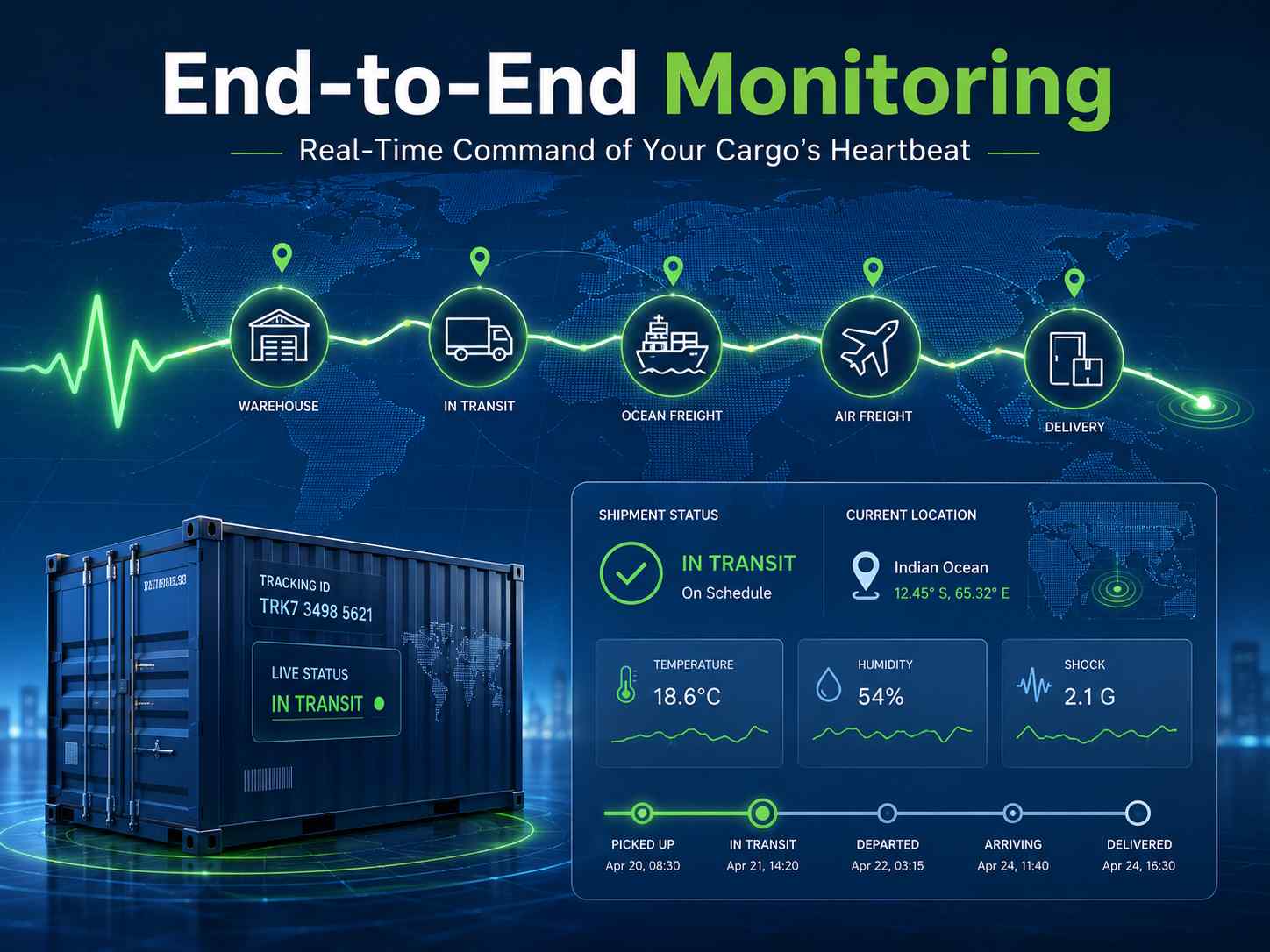
These points are like the heartbeat of the shipment. If the heartbeat is normal, you feel calm. If it suddenly stops or becomes strange, you need to check quickly. This is very useful for high-value cargo, fragile goods, time-sensitive orders, e-commerce stock, personal moving shipments, and commercial inventory.
Practical Example
A customer ships mixed cargo from Guangzhou to Malaysia by sea freight DDP door-to-door service. If there is only one update saying “in transit,” the customer may feel nervous for two weeks. But with end-to-end monitoring, the customer can know: goods received at warehouse, cartons measured, shipment loaded, vessel departed, arrived at port, customs clearance started, local delivery arranged, and final delivery completed. Same shipment, but the feeling is totally different.
Why Real-Time Cargo Tracking Helps Reduce Cost
Some people think tracking is only for comfort. Actually, it can also reduce cost. When cargo status is unclear, many decisions are delayed. Customers may prepare delivery too early or too late. Warehouses may charge storage fees. Customs documents may be submitted late. Delivery appointments may be missed. Sales teams may promise customers a date that is not realistic. These small problems can become real money loss.
With better shipment tracking and predictive ETA updates, businesses can plan more calmly. If the container is delayed, the buyer can adjust warehouse booking. If customs needs extra documents, they can prepare earlier. If last-mile delivery is coming, the receiver can arrange staff. If the cargo is still at port, nobody needs to wait at the destination warehouse like a fool. This is very practical.
For e-commerce sellers, visibility can help avoid stockout problems. For wholesalers, it helps control inventory. For project cargo, it helps match installation schedule. For personal shipments, it simply reduces anxiety. Maybe it sounds simple, but this is exactly what many overseas customers search for: international shipping tracking, freight forwarding tracking, container tracking, real-time logistics updates, door-to-door shipping status, and customs clearance tracking.
Monitoring Is Also About Communication
Technology is useful, but communication still matters. A tracking system can show data, but a good freight forwarder should explain what the data means. For example, “customs inspection” may sound scary, but sometimes it is just a normal document check. “Delayed at port” may mean port congestion, missing connection, vessel schedule change, or waiting for clearance. The words look similar, but the meaning can be different.
This is why real-time cargo tracking should go together with human support. If the customer only sees confusing updates, they may still feel lost. A useful logistics team should tell the customer what happened, what is being done, and what the next possible step is. Actually, this is where experience makes a big difference.
Some shipments are simple, maybe one box by express courier. But many international freight shipments are not that simple. Sea freight, LCL shipping, FCL shipping, air cargo, railway freight, trucking, customs clearance, warehousing, and last-mile delivery all involve different parties. The customer does not need to talk with everyone. The freight forwarder should connect the dots.
What Information Should Customers Provide?
To monitor cargo properly, the forwarder also needs clear information from the customer. If the information is messy, tracking and communication will also become messy. Before shipping, it is better to prepare the basic details clearly.
- Product name, product photos, and cargo category.
- Carton quantity, size, weight, and total volume.
- Supplier address, contact person, and pickup requirements.
- Destination country, city, postal code, and full delivery address.
- Shipping method preference: sea freight, air freight, railway, trucking, express, or DDP door-to-door shipping.
- Commercial invoice, packing list, and customs clearance documents if needed.
- Special notes, such as fragile goods, battery goods, sensitive goods, urgent delivery, or delivery appointment request.
Actually, the clearer the information, the easier the monitoring. If the product has battery, liquid, powder, magnetic parts, brand logo, or special customs requirement, it should be mentioned before shipping. Do not wait until the cargo is stuck. That is the expensive way to learn.
A Practical End-to-End Monitoring Process
A good monitoring process should follow the cargo from the beginning to the end. It does not need to be complicated, but it must be consistent. Here is a practical way to manage the cargo’s “heartbeat.”
Exception Monitoring: The Real Value Is Early Warning
Normal updates are useful, but exception monitoring is even more important. If everything is moving smoothly, tracking is just confirmation. But when something goes wrong, early warning can protect time and money. Maybe customs asks for more documents. Maybe the vessel schedule changes. Maybe the container is held at port. Maybe the local delivery company cannot reach the receiver. Maybe the address is incomplete. These things happen.
If the problem is found early, it may be easy to fix. If it is found too late, the cargo may enter storage, miss delivery, create extra fees, or delay customer orders. This is why real-time freight visibility and exception alerts are very important. They are not only for large companies. Even small businesses can benefit from clear shipment status and quick communication.
In other words, monitoring is not only watching. It is control. It helps you react before the problem becomes bigger.
End-to-End Visibility Builds Trust
For overseas customers, the hardest part of buying from China is sometimes not the product. It is the waiting. After payment, after supplier delivery, after cargo enters the warehouse, the customer wants to know what is happening. If there is no update, even a normal shipment feels risky. But if there are clear updates, the customer feels much more comfortable.
This is especially important for China to Malaysia shipping, China to Singapore shipping, China to Thailand logistics, China to Vietnam trucking, China to UK freight, China to Europe railway, China to USA sea freight, and China to UAE door-to-door shipping. Different routes have different timelines, but customers everywhere want the same thing: clear information.
Actually, good tracking does not mean promising impossible delivery time. It means telling the truth clearly. If the cargo is moving normally, say it. If there is a delay, explain it. If documents are needed, ask early. If delivery is coming, remind the receiver. This kind of simple, honest monitoring builds long-term trust.
Final Thought: Do Not Let Your Cargo Travel Blind
International logistics is not only about moving goods. It is about managing movement. Without end-to-end monitoring, a shipment may look fine until suddenly it is not. With real-time cargo tracking, freight visibility, predictive ETA updates, customs clearance tracking, and final delivery confirmation, the whole process becomes easier to control.
Of course, tracking cannot stop every delay. It cannot make a vessel sail faster or make customs skip inspection. But it can help you know what is happening earlier. And in logistics, earlier information often means better decisions.
So whether you are shipping small e-commerce parcels, LCL sea freight, full container load, air cargo, sensitive goods, furniture, machinery, or personal moving cargo, do not ignore monitoring. Keep your cargo’s “heartbeat” visible from origin to destination. That is how you reduce surprises, protect your business, and make international shipping feel much less stressful.
Need End-to-End Cargo Monitoring from China?
You can send your cargo name, product photos, carton size, weight, quantity, supplier address, destination country, and delivery address. We can help check the suitable shipping method and provide clear updates from China warehouse receiving to customs clearance and final door-to-door delivery.
Contact YDT Logistics