Cheap International Shipping Traps: Why the Lowest Freight Quote Is Not Always the Best Deal
In international logistics, everybody likes a low price. Actually, this is very normal. Importers, Amazon sellers, e-commerce buyers, wholesalers, and people shipping personal goods all want to reduce shipping cost. But sometimes the cheapest international shipping quote is not really cheap. It may only look cheap at the beginning, then hidden shipping fees, customs clearance charges, destination fees, warehouse costs, remote area surcharge, or delivery problems appear later. That is where the low-price trap starts.
Why Cheap Shipping Quotes Look So Attractive
When someone searches online for “cheap international shipping,” “lowest freight quote,” “shipping from China to USA cost,” “China to Europe DDP shipping,” “door-to-door shipping from China,” or “best freight forwarder from China,” the first thing they usually compare is price. This is understandable. Freight cost can affect product profit directly, especially for small businesses and e-commerce sellers.
But here is the problem: not every quote includes the same service. One freight forwarder may quote only the basic ocean freight. Another one may include pickup, export customs clearance, import customs clearance, tax, delivery, fuel surcharge, and final door-to-door delivery. If you only compare the number, it is very easy to choose the wrong one.
Actually, many low-price traps come from unclear quotation. The price looks nice because some costs are not written clearly. Maybe the quote does not include destination charges. Maybe customs broker fees are separate. Maybe the delivery address is not covered. Maybe the quote is for normal goods only, but your cargo includes batteries, liquids, cosmetics, branded goods, magnetic items, or oversized goods. Later, the price changes, and the customer feels cheated.
Low Base Rate
Some quotes only show the base freight rate, but do not include customs clearance, destination charges, delivery fees, or other surcharges.
Unclear Service Scope
A cheap quote may not say clearly whether it is port-to-port, airport-to-airport, warehouse-to-door, or full DDP door-to-door shipping.
Hidden Risk
Low-price routes may use slower schedules, more transfers, weak tracking, or unstable customs clearance arrangements.
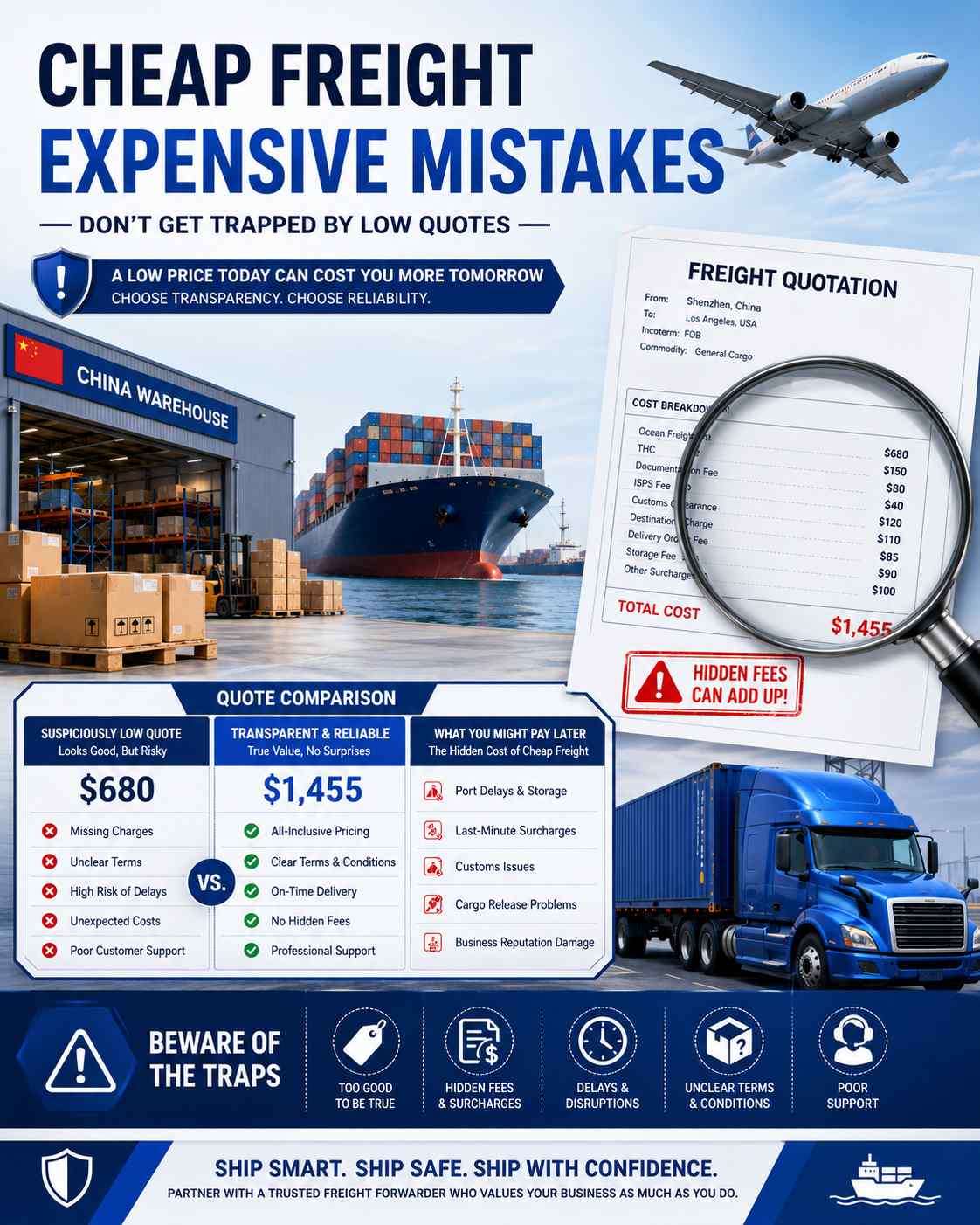
The Most Common Hidden Fees in International Logistics
Hidden fees are not always “scams.” Sometimes they are real costs in logistics. The problem is that some companies do not explain them before shipping. So the customer only finds out when the cargo arrives at the port, airport, customs warehouse, or final delivery stage. By then, it is usually too late to change the plan.
Common hidden shipping costs may include origin handling, terminal handling charges, documentation fee, customs clearance fee, inspection fee, storage fee, demurrage, detention, fuel surcharge, remote area surcharge, residential delivery fee, tail lift fee, appointment delivery fee, oversized cargo fee, and repacking cost. For air freight, volumetric weight and chargeable weight can also surprise people. A carton may be light, but if it is bulky, the charged weight may be much higher than actual weight.
For sea freight, the cheap price may only cover ocean freight. But after arrival, there may be destination port charges, customs broker fees, warehouse unloading, local trucking, and delivery fees. For DDP shipping, customers should ask whether duties, taxes, customs clearance, and last-mile delivery are really included. Do not just hear “door-to-door” and relax. Door-to-door has many versions.
Small reminder: a good freight quote should explain what is included and what is not included. If the quote is extremely cheap but very vague, that is already a warning sign.
Port-to-Port Price vs Door-to-Door Real Cost
This is one of the biggest traps in international shipping. A port-to-port quote may look much cheaper than door-to-door shipping, because it only covers part of the journey. Maybe it moves the goods from China port to destination port. But after that, the customer still needs to handle import customs clearance, duties, taxes, destination charges, warehouse release, local trucking, and final delivery.
For experienced importers, port-to-port shipping can be fine. They may have their own customs broker and local delivery partner. But for beginners, small businesses, personal buyers, Taobao buyers, 1688 buyers, or new Amazon sellers, port-to-port may create more trouble. They may think the shipment is almost finished when the vessel arrives, but actually the hard part just starts.
DDP door-to-door shipping from China is popular because it feels simpler. The freight forwarder handles more steps, including customs clearance and delivery. But even with DDP, you still need to confirm the details. Does it include import duties? Does it include VAT? Does it include remote area delivery? Does it accept your cargo type? Does it include residential address delivery? These questions sound boring, but they protect your money.
Practical Example
A customer gets two quotes for shipping from China to Europe. Quote A is very cheap, but it only says “sea freight.” Quote B is higher, but it includes China warehouse receiving, export clearance, ocean freight, import customs clearance, taxes, local delivery, and cargo tracking. At first, Quote A looks better. But after destination charges, customs broker fees, storage, and truck delivery are added, Quote A may become more expensive than Quote B. This kind of thing happens more often than people think.
Low Price May Mean Slow Route or Too Many Transfers
Another low-price trap is route quality. Sometimes a cheap shipping route is cheap because it uses a slower schedule, more transshipment, longer waiting time, or less stable delivery network. This does not mean the route is always bad. For low-value goods that are not urgent, it may still be acceptable. But for urgent cargo, fragile goods, high-value products, seasonal stock, or customer orders, the cheapest route may create bigger risk.
For example, a route with many transfers may increase the chance of delay, carton damage, missing labels, or unclear tracking. A low-cost sea freight channel may wait longer for container space. A cheap air freight channel may have limited flights or unstable customs clearance. A very low DDP rate may use a slower local delivery method. Maybe everything arrives safely, but maybe the delivery time becomes much longer than expected.
Actually, the best shipping method is not always the cheapest one. The better question is: does this shipping method match your cargo? If you ship furniture, packaging matters. If you ship electronics, customs and battery rules matter. If you ship Amazon FBA stock, delivery appointment and labels matter. If you ship personal goods, door-to-door clarity matters. Price is only one part of the full logistics plan.
Be Careful with “All-In Price” Without Details
Many customers like all-in shipping price because it sounds simple. Actually, all-in price can be very useful if it is real and clearly explained. But if someone only says “all included” without writing the service scope, cargo limits, delivery area, customs responsibility, and possible extra fees, you still need to be careful.
A real all-in quote should normally explain the shipping method, route, estimated transit time, chargeable weight or CBM, cargo type requirement, customs clearance scope, tax responsibility, delivery range, remote area policy, and what happens if customs inspection occurs. Maybe not every detail fits in one message, but the main points should be clear.
The dangerous situation is when the quote is cheap, fast, and vague at the same time. Cheap is okay. Fast is okay. But cheap, fast, and no details? That is a little hard to believe. International shipping has real costs. If a price is far lower than normal market level, there is usually a reason.
What Information Should You Provide Before Asking for a Quote?
If you want an accurate international shipping quote, you also need to provide clear cargo information. Sometimes customers only say “how much to ship to USA?” or “how much to Germany?” This is too broad. A good freight forwarder needs to know the cargo details before giving a realistic price.
- Product name and product photos.
- Whether the goods contain battery, liquid, powder, magnet, food, cosmetics, branded goods, or other sensitive items.
- Carton quantity, gross weight, carton dimensions, and total volume.
- Pickup city or supplier location in China.
- Destination country, city, postcode, and full delivery address type.
- Preferred service: sea freight, air freight, rail freight, truck freight, express, or DDP door-to-door shipping.
- Declared value, invoice, packing list, HS code, and customs clearance requirements if available.
The clearer the information, the easier it is to avoid price changes later. If the goods are bulky, chargeable weight may be different from actual weight. If the destination is remote, delivery cost may change. If the goods are sensitive, the channel may change. Actually, a cheap wrong quote is useless. A realistic quote is much more valuable.
How to Compare Freight Quotes Properly
Comparing international freight quotes is not only comparing numbers. You need to compare the service behind the number. Sometimes a higher quote is actually cheaper in the end because it includes more things and avoids surprise fees. Sometimes a cheap quote is fine, but only if you know exactly what it includes.
When a Low Price Is Actually Acceptable
To be fair, low price is not always bad. Sometimes a cheaper shipping method is suitable. If your goods are low-value, not urgent, not fragile, not sensitive, and the destination is easy to deliver, a budget shipping route may be enough. For example, large but low-value goods can often use sea freight. Small non-urgent goods can use economy channels. Some customers simply prefer slower delivery to save money.
The key is knowing what you are choosing. If you choose a cheaper route and understand the slower transit time, limited tracking, possible extra charges, and service boundary, then it is not a trap. It is just a budget option. The real trap is when the customer thinks they bought full door-to-door service, but actually only paid for part of the journey.
So, actually, cheap shipping is okay when it is transparent. Cheap shipping becomes dangerous when it is unclear.
Final Advice: Look at Total Landed Cost, Not Only Freight Rate
In international logistics, the freight rate is only one part of the total landed cost. You also need to think about customs clearance, import duties, taxes, destination charges, delivery fees, storage, insurance, packaging, and possible delay cost. Sometimes the lowest freight quote gives you the highest final bill.
Before booking, ask simple but important questions: What does this price include? What is not included? Is this DDP or DAP? Is customs clearance included? Are duties and taxes included? Is final delivery included? What happens if customs inspects the cargo? Is the destination postcode covered? Is the cargo type accepted by this channel?
Maybe this sounds like too many questions. But actually, asking before shipping is much cheaper than arguing after the goods arrive. A reliable freight forwarder should not be afraid of these questions. Clear quote, clear route, clear tracking, and clear responsibility are much more important than a beautiful low number.
So, do not let a very cheap international shipping quote make you ignore the basics. The best logistics plan is not always the lowest price. It is the plan that helps your cargo arrive safely, keeps the total cost predictable, and avoids those annoying surprise charges that nobody wants to see.
Need a Clear International Shipping Quote?
You can send your cargo name, product photos, carton quantity, weight, dimensions, supplier address, destination postcode, and preferred shipping time. We can help compare sea freight, air freight, rail freight, truck freight, express, and DDP door-to-door shipping, then explain what is included and what may create extra cost.
Contact YDT Logistics