Cushioning and Packaging for International Shipping
When goods travel across countries, packaging is not just about making the carton look nice. It is more like giving the product a safe jacket before it goes through trucks, warehouses, airports, ports, customs checking, loading, unloading, and sometimes a very long journey. Actually, a lot of damage does not happen because the product is bad. It happens because the packaging was too simple, too loose, or maybe not suitable for the shipping method.
Why Cushioning and Packaging Really Matter
In international logistics, one carton may be handled many times before it reaches the final address. It may be stacked under other boxes, moved by forklift, placed inside a container, loaded into an aircraft, or transferred between local delivery trucks. Sometimes the outside carton looks okay, but the inside product already moved around too much. This is a very common thing.
Cushioning and packaging are mainly used to reduce shock, pressure, vibration, rubbing, and small impacts during transport. Maybe the parcel only drops a little bit from a sorting table, but for glassware, ceramic items, electronics, lighting products, or furniture corners, that small drop can already cause cracks. It is hard to imagine until it happens, but one empty space inside the carton can make the product shake thousands of times during the trip.
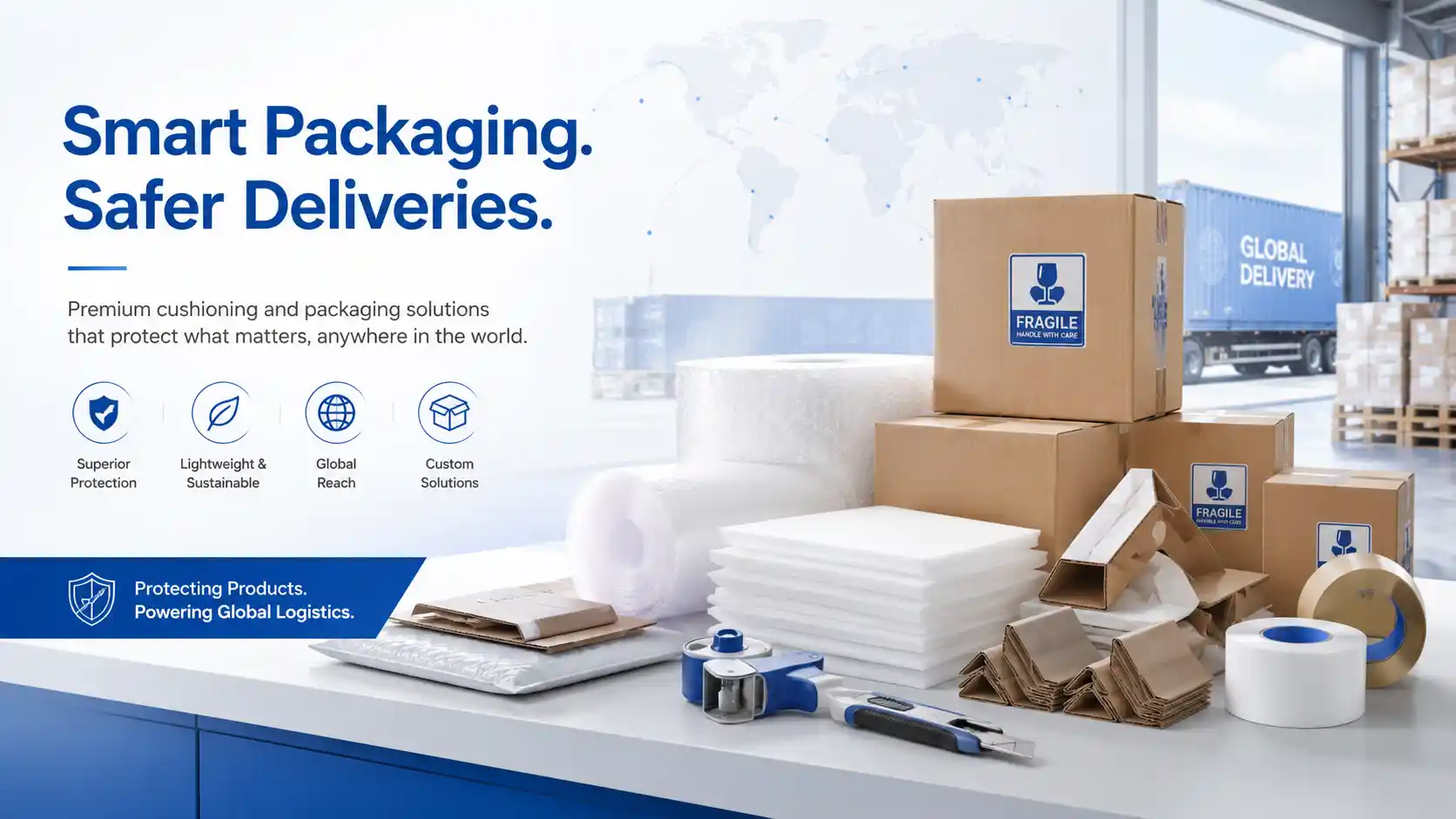
Good packaging does not mean using the most expensive material every time. It means using the right material in the right place. For example, foam may work well for electronics, bubble wrap is useful for fragile surfaces, corner protectors are important for furniture, and wooden crates are sometimes necessary for heavy or high-value goods. The key point is simple: the product should not touch the outer carton directly, and it should not move inside the box.
Common Packaging Problems We See Quite Often
Actually, many packaging problems look small at the beginning. A seller may think, “This is only one carton, no big issue.” But after sea freight, air freight, or express delivery, the small problem may become a real damage claim. Especially when goods are shipped from China to another country, the parcel normally goes through several different hands, not only one delivery guy.
Too Much Empty Space
If there is empty space inside the carton, the item will move. Once it moves, it can hit the carton wall again and again. This is probably one of the easiest mistakes to avoid, but it still happens a lot.
Weak Outer Carton
Some cartons look fine when they are new, but they cannot handle long-distance shipping. For heavy goods, thin cartons may collapse when stacked with other cargo.
No Corner Protection
Furniture, frames, cabinets, mirrors, and machines often get damaged from the corners first. Corners are easy to hit during loading, so they need extra protection.
Choose Cushioning Materials Based on the Product
There is no single packaging material that fits everything. Different products need different cushioning methods. Sometimes bubble wrap is enough, but sometimes bubble wrap alone is not enough at all. If the item is heavy, sharp, fragile, expensive, or easy to scratch, the packaging needs to be upgraded.
1. Bubble Wrap
Bubble wrap is a very common cushioning material. It is good for small fragile items, glass cups, ceramic decorations, plastic parts, gifts, and products with smooth surfaces. But one thin layer is not magic. For fragile items, maybe two or three layers are needed, and the item should still be fixed inside the carton.
2. Foam Sheet and Foam Board
Foam is useful when the product needs more stable protection. Electronics, display screens, lighting products, and some machine parts often need foam around the body. Foam can help absorb shock and reduce direct contact with the carton wall. For products with a fixed shape, custom foam is even better, because the product sits inside the foam and does not move easily.
3. Air Pillows and Filling Paper
Air pillows and filling paper are often used to fill empty space. They are light and easy to use. But they are not always suitable for heavy products. If the product is too heavy, air pillows may lose shape or burst under pressure. So for heavy goods, it is better to use stronger filling material or combine different materials together.
4. Corner Protectors
Corner protectors are very important for furniture, mirrors, picture frames, wooden panels, marble tops, cabinets, and other items with edges. In many real cases, the main body is fine, but one corner is broken. It looks like a small issue, but for furniture and decorative items, one broken corner can make the whole product hard to sell or use.
5. Wooden Crate or Wooden Frame
For high-value goods, heavy machines, fragile furniture, large glass, ceramic slabs, or irregular cargo, wooden packing may be the safest choice. Of course, it costs more and increases the volume or weight. But special cases need special handling. If the product is expensive, maybe spending a little more on packaging is still cheaper than replacing the whole item after damage.
How to Pack Fragile Items More Safely
Fragile items need more attention. Glass, ceramics, lamps, acrylic products, mirrors, tiles, vases, ornaments, and handmade products can break easily during transport. Actually, fragile labels help a little, but we cannot depend on the label only. The real protection still comes from the inside packaging.
Wrap Each Item Separately
Do not put two fragile items together without separation. They may hit each other during transport. Each item should be wrapped by bubble wrap, foam, or soft paper first.
Keep Space Between Item and Carton Wall
The product should not touch the outer carton directly. A safe distance with cushioning material around it can reduce shock from outside.
Fill All Empty Gaps
Shake the carton gently after packing. If you can hear movement inside, the packaging is probably not tight enough. Add more filling material until the goods stay stable.
Use Strong Outer Carton
For international shipping, use a stronger carton, not a thin supermarket-style box. Double-wall cartons are better for many goods, especially if the carton is heavy.
Seal the Carton Properly
Tape should cover the main opening and the edges. For heavy cartons, extra tape or packing straps can help. A carton that opens during transport is one of the worst situations.
Packaging for Furniture and Large Items
Furniture packaging is a little different from small parcel packaging. Tables, chairs, sofas, cabinets, beds, shelves, and office furniture often have large surfaces and exposed corners. Scratches, dents, broken legs, and damaged edges are the most common issues.
For furniture, it is better to protect the surface first, then protect the corners, then fix the whole item. Soft film or foam can reduce scratches. Corner guards can reduce impact. Carton boards or wooden frames can make the outside stronger. If the furniture is very large or heavy, palletizing may also be needed, because it is easier and safer for forklift handling.
Some customers may think, “The furniture already has factory packaging, so it should be okay.” Maybe yes, but not always. Factory packaging is sometimes designed for domestic delivery or warehouse storage, not for international sea freight or long-distance trucking. If the item will be shipped across countries, it is safer to check whether the packaging can handle stacking, moisture, vibration, and repeated loading.
Packaging for Electronics and Machines
Electronics and machines need both shock protection and surface protection. Products like LED lights, speakers, cameras, routers, screens, small appliances, machine parts, and control panels may look strong outside, but the internal parts can be sensitive. Sometimes the carton is not broken, but the product stops working after transport. This can happen when vibration protection is poor.
For electronics, foam inserts, anti-static bags, waterproof bags, and strong cartons are often helpful. If there are batteries, magnets, liquids, powders, or other special parts, the shipping channel also needs to be checked before sending. Packaging is important, but correct cargo declaration and suitable transport method are also important.
Moisture Protection Is Also Important
Many people only think about impact damage, but moisture can also be a problem, especially for sea freight. Containers may face temperature changes, long sailing time, rain during loading, or humid weather at the port. Paper cartons, wooden products, fabric goods, leather items, books, and some electronics can be affected by moisture.
In some cases, plastic wrapping, waterproof bags, desiccants, pallet wrapping, or moisture-proof film can help. It does not mean every shipment needs heavy waterproof packaging, but if the goods are sensitive to humidity, it is better to prepare in advance. Once mold or water marks appear, it is usually very hard to fix.
Outer Labels and Handling Marks
Labels cannot replace good packaging, but they still help warehouse staff understand how to handle the goods. For example, “Fragile”, “This Side Up”, “Keep Dry”, “Do Not Stack”, and “Heavy Cargo” are common marks. The label should be clear, large enough, and placed on a visible surface.
However, we should be honest here. In real logistics, not every worker will treat every carton softly just because there is a fragile label. This is why inside cushioning is still the real protection. A label is a reminder, not a shield.
Before Shipping, What Information Should You Provide?
If you need a packaging suggestion or shipping quotation, it is better to provide product photos, carton size, weight, quantity, product material, product value, destination address, and whether the item is fragile. With these details, the forwarder can suggest sea freight, air freight, truck transport, express courier, or other suitable shipping methods.
For example, if the product is light but large, volume weight may matter. If it is heavy and fragile, wooden packing may be suggested. If it is small and urgent, air freight or express may be better. If it is large and not urgent, sea freight may save more cost. Actually, the best shipping plan is not only about cheap price. It should also consider safety, time, packaging, customs, and delivery method.
Simple Q&A About Cushioning and Packaging
Sometimes yes, but not always. For small light items, bubble wrap may be okay. For glass, ceramics, lamps, or high-value fragile products, bubble wrap should usually be combined with foam, strong carton, and gap filling.
No, not every shipment needs wooden packing. But for large, heavy, expensive, or easy-to-break goods, wooden crate or wooden frame may be the safer choice.
Maybe, but it depends on the product and the route. Some factory packaging is strong enough, but some is only suitable for domestic delivery. If the route is long, it is better to check and reinforce it.
The most common mistake is leaving empty space inside the carton. When the product can move, damage becomes much more likely.
Final Thoughts
Cushioning and packaging may look like a small step, but in international shipping it can decide whether the goods arrive safely or not. A strong carton, enough inner filling, proper foam, corner protection, moisture protection, and clear labels can reduce many problems before they happen.
Actually, good packaging is not about making the parcel look fancy. It is about making the product stable, protected, and ready for a long journey. Maybe the customer never notices the packaging when everything arrives safely. But when packaging is poor, everyone notices very quickly.
So before shipping goods overseas, especially fragile items, furniture, electronics, machines, glass, ceramics, lighting products, or high-value cargo, take a little time to check the packaging. It is a simple step, but it can save money, reduce complaints, and make the whole shipping process much smoother.
Need Help With International Shipping and Packaging Advice?
If you are shipping goods from China to overseas countries, you can prepare product photos, size, weight, quantity, and destination address. We can help check the suitable shipping method, packaging suggestion, and quotation based on the real cargo situation. Sometimes a small packaging change can make the whole shipment much safer.